Navigating Car Insurance Rates Across US States

Factors Influencing Car Insurance Rates
The factors that significantly impact car insurance rates across different states are varied, multifaceted, and highly interconnected.
One of the most influential factors is the locale’s rule of law, specifically the level of regulation. States with stringent insurance regulations, like Michigan and Florida, generally observe higher premiums due to a phenomenon called risk pooling.
This principle dictates that the more claims made within a specific demographic or geographic region, the higher the rates for everyone within that pool.
States with higher incidences of vehicle-related lawsuits or comprehensive claims often see this reflected in their average car insurance premiums.
Another key contributing factor is the prevalence of uninsured drivers within a state. It may seem paradoxical, but locations with a greater number of uninsured or underinsured motorists tend to witness steeper insurance rates. This is because insurance providers need to account for lost costs associated with accidents where the at-fault party cannot pay.
Lastly, the frequency of natural disasters or extreme weather events within a region can also appreciably affect car insurance rates. These perilous conditions often lead to an elevation in accident rates or damage claims, ultimately driving up the median insurance premiums.
While these factors explain a portion of the wide disparities seen in car insurance rates across the US, other variables such as population density, crime rates, and average income levels also play a pivotal role. These elements collectively form a complex ecosystem, continuously shaping a state’s car insurance landscape.
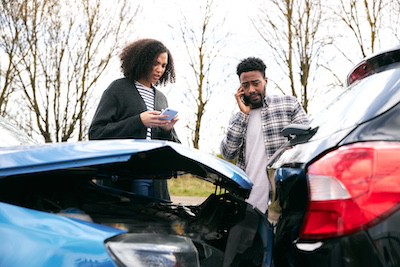
Top 5 States with Highest Car Insurance Rates
The highest car insurance rates are typically found in Michigan, Louisiana, and Florida–states known for their unique economic demographics and specific challenges related to car insurance.
In Michigan, for example, high rates can largely be attributed to its no-fault car insurance system which mandates unlimited lifetime personal injury protection coverage. This unique regulation significantly escalates insurance costs, even though it provides considerable benefits to insured drivers involved in accidents.
Louisiana, with a complex court system and high litigation costs, follows closely behind. Litigiousness in this state has resulted in more claims going to court, which increases insurers’ expenses and inevitably trickles down into premium costs. High levels of fraud in Florida also hike up the costs of insurance premiums.
Additionally, Florida’s higher-than-average number of older drivers, who are statistically more liable to accidents, tends to inflate insurance costs further.
While this highlights the overarching reasons for high car insurance rates in these particular states, there are also nuances seen on a smaller scale. For instance, states with higher costs of living, like New York and New Jersey, tend to have more expensive insurance rates.
Adding to these are the significant healthcare costs in these states, which increase the potential payouts insurers might face, causing the cost of premiums to soar. A state’s technological infrastructure can also impact rates, with states that lack robust systems for controlling insurance fraud often grappling with higher costs.
Therefore, the narrative of high car insurance rates is a multi-layered one, woven by various distinct yet interlocking parts – legislative nuances, economic demographics, fraud levels, healthcare costs, and technological infrastructure, to name just a few. These factors all serve to shape the vastly diverse car insurance landscape we see across the United States today.
Top 5 States With the Lowest Car Insurance Rates
Examining data from multiple insurance companies, coastal Maine is touted as holding the title for the lowest average car insurance rates in the entire country. This can be attributed significantly to the communal rural lifestyle commanding principles of responsible driving.
For example, non-aggressive driving with a lower frequency of severe road accidents helps keep premium levels down. Furthermore, Maine thrives on a low-key lifestyle, with less high-tech, expensive cars on the roads, which equates to lower costs when it comes to repairs and replacements in the event of damages.
Across the country, in the Pacific Northwest, is the state of Idaho, frequently ranking second only to Maine for low car insurance rates. The key factor in this instance is the state’s diverse economic structure, which includes agriculture, manufacturing, and technology sectors.
This well-balanced diversification stabilizes Idaho’s economy, reducing the financial pressure on insurers and thus facilitating competitive pricing in the car insurance market. Moreover, Idaho’s effective law enforcement efforts particularly against automotive crimes, infuse a safe driving culture, encouraging insurance companies to further cut down on insurance costs.
In conclusion, it is of no dispute that each state has its unique suite of elements influencing its car insurance landscape. However, responsible driving coupled with a solid economic structure can be a winning formula for securing lower car insurance rates. Through continuous innovation and adoption of cutting-edge solutions in fraud detection, risk assessment, and data processing, other states can potentially emulate the success story of Maine and Idaho, rendering car insurance more affordable for their residents.

Possible Innovations to Moderate Car Insurance Rates
Innovation, as a tool for reducing car insurance rates, could play an instrumental role. It is pivotal to weave in elements of technology and progressive policy-making to construct realistic solutions to high insurance costs.
Telematics, or vehicle tracking systems, can be a promising onset to an era of fair pricing models. These systems collect extensive data on driving behaviors, vehicle use, and road conditions, and use it to generate more precise risk profiles.
Instead of relying on statistical data and generalized models, insurers could calibrate premiums based on real-time, personalized driving information. This could mean cheaper premiums for safe drivers, regardless of the state they reside in. It also contributes to promoting better driving behavior, thereby reducing accident-related insurance claims at a larger scale.
Self-Driving Cars
Moreover, it’s crucial to mention the transformative potential of autonomous vehicles in this context. Self-driving cars show promise for drastically reducing road accidents, given they remove the human error factor. Broad deployment of these vehicles could shake up the insurance landscape completely, potentially rerouting liability from the driver to the vehicle manufacturer. Such a shift could lead to a substantial decrease in car insurance rates for consumers.
Further, legislative adjustments enabling greater competition among insurers could potentially disrupt state monopolies and high premiums. The insurance industry fundamentally thrives on competition; therefore laws that inhibit such competition only serve to artificially inflate costs. Being open to deregulating insurance markets and inviting competition could lead to lower rates for consumers.
As we usher in this age of unprecedented innovation, it is salient to remember the value of adaptability and forward-thinking, particularly in industries as archaic yet crucial as car insurance. The true work begins not with the advent of these technologies, but their integration into existing structures. Innovation alone can’t suffice – it must be rooted in a landscape that’s ready to accommodate and nourish it.
Comments
Post a Comment